Friday, December 12, 2014


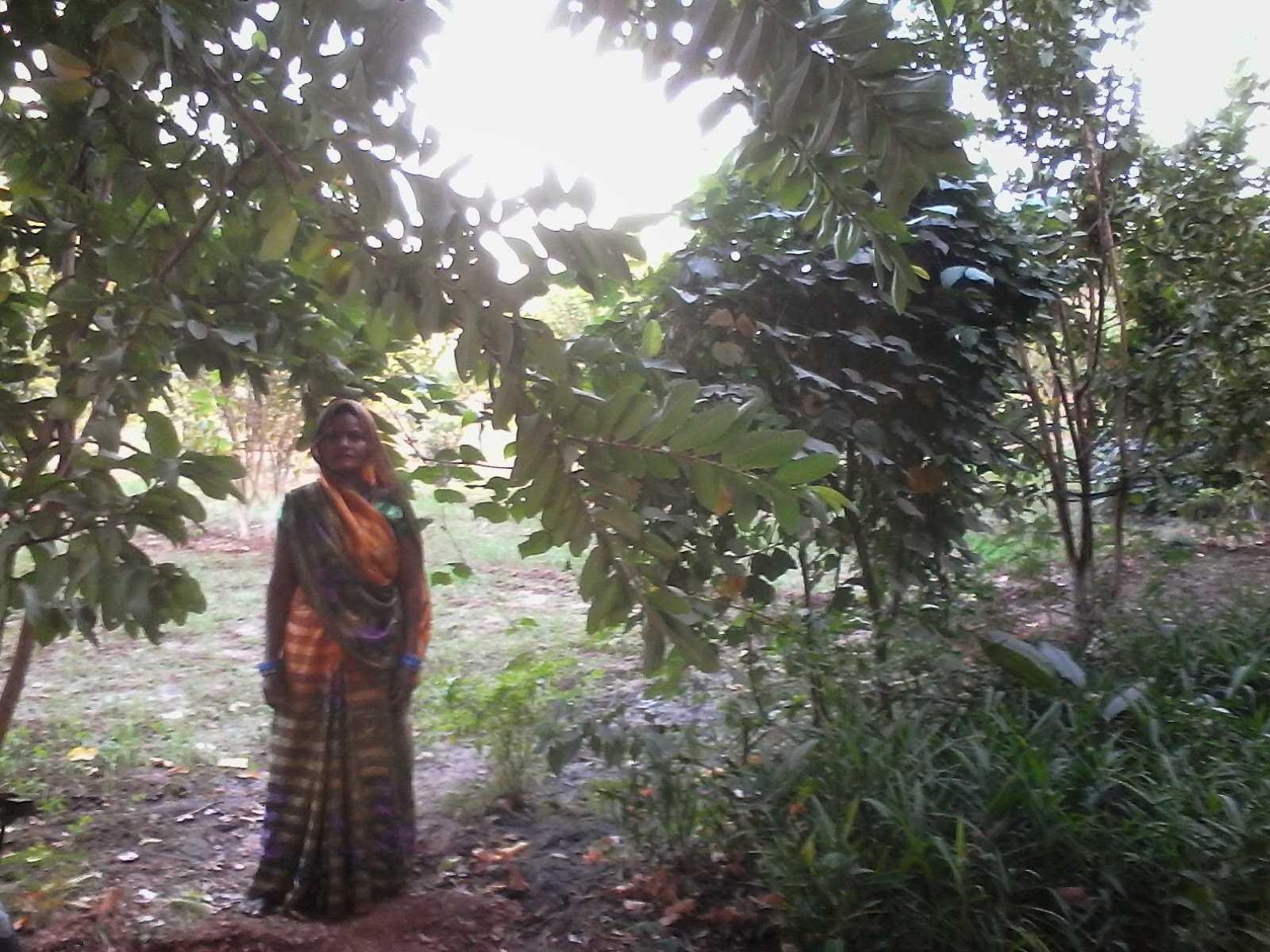
Description: C:\Users\HP\Desktop\Picture Feild\IMG_20141204_170638.jpglQyrk dh dgkuh
esjk uke lquhrk lgfj;k gSA eS CykWd rkycsgV ftyk yfyriqj dh jgus ckyh gWwA esjs lewg laxBu dk uke y{eh efgyk Lo;a lgk;rk lewg dh eSa v/;{k gWwA esjs xzke laxBu dk uke 'kfDr efgyk xzke laxBu oqnkouh mldh eS v/;{k gwW A esjs CykWd laxBu dk uke gS jkuh voarh ckbZ efgyk CykWd laxBu rkycsgV mldh eS mik/;{k gWw A tc eSa Lo;a lgk;rk lewg es ugh Fkh rks eS vkSj esjs ifr nwljksa dh etnwjh dj fdlh rjg vius ifjokj dh xqtj olj djrh Fkh vkSj ifjokj pykuk cMk eqf’dy Fkk D;ksfd u rks esjs ikl iSlk Fkk vkSj u dksbZ vkenuh dk tfj;k Fkk ftlls eS vkSj esjk ifjokj xjhch ls tw> jgs Fks u rks cPpks dks lgh le; ij diMk o [kkuk rFkk f’k{kk feyuk cgqr eqf’dy Fkk A 
lewg laxBu ds ek/;e ls gesa igpku o bTtr feyh ftlls eS viuh NksVh&NksVh opr djds viuk iSlk bdf=r fd;k vkSj eSus viuh [ksrh ds fy, opr ls 5000: fy;s vkSj vius [ksrksa ds vkl&ikl ve:n vkSj iihrk ds isM yxk;s ftles 2000: dh yxkr vk;h vkSj blh ds lkFk lkFk mnZ vkSj eDdk dk cht fy;k vkSj mldh cqvkbZ djoknh ftlls eSus 5 dqUry mnZ 2 dqUry eDdk fudkyh vkSj eSus 7000: ds iihrk csps vkSj 5200: ds ve:n csps ftlls eq>s mlh [ksr ls 18000:- mnZ ,oa 2000: eDdk gqvk vr% blh [ksr ij eSus 32200 : dh vkenuh izkIr dh gSA blh ds lkFk eSus tks lewg ls iSlk fy;k Fkk cks okfil dj fn;k blh ds lkFk jktho xkW/kh efgyk fodkl ifj;kstuk }kjk tkudkjhA
nh x;h fd cfgu vki blh ds lkFk&lkFk eqxhZ ikyu Hkh djsa ftlls vkidh vkenkuh vkSj cM tk;sxh rks fQj eSus vius ifr ls fopkj foe’kZ fd;k vkSj 100 oPps fy;s rks eSus eqxhZ ikyu Hkh dj fy;kA
vkt eSa vkSj esjk ifjokj cgqr [kq’k gSA vr% eS viuh tSlh lHkh xjho cfguks dks isz.kk nsuk pkgrh gWw fd vki Hkh lewg laxBu esa tqfM;sa vkSj vkxs cfM;sA

Saturday, April 20, 2013

Experience is the Best Teacher: Hilauli’s SHG members show the way

Experiential learning stays with a learner for life. It is an extremely vigorous form of absorbing which entrenches itself in the way a person thinks. Experiential learning is not peripheral; it has a depth to its process that sinks in, in a way that theoretical learning cannot achieve. It is this form of learning that is disseminated in a horizontal manner from member to member throughout RGMVP’s Self Help Group (SHG) platforms in Uttar Pradesh.


“Knowledge is continuously derived from and tested out in the experiences of the learner” (Kolb, 1984:27)[1]. In the application of each new experience the individual learner draws from past knowledge and practice, which is then combined with the new experience which leads to a modification in behaviour. This expands the knowledge base of the practitioner, and this knowledge can be further utilized in varied situations.

During the monthly Block Organisation meeting in Hilauli Office bearers at the block level wanted to know from all those present, their own experience of working in the field and how they saw the SHG platforms evolving.

Madhuri an office bearer herself started recounting the experience from her own village Bardaha. She said that although there were many active SHGs in her village it was only a few members who were stepping up and taking loans, other members were holding back as they did not know what to expect. Shanti an SHG member took out money to buy a goat. Within a year the Goat had given birth to four calves, taking Shanti’s fleet of goats to five, through this she was able to pay back her loan easily. Seeing Shanti’s success Ritu a member of Shanti’s SHG gained confidence. Ritu who at first was reluctant to take out money for the purpose of livelihood took courage form Santi’s experience and has now decided that in the next mela (fair) she will buy a buffalo, and use this as a medium to enhance her livelihood.


Similarly Mamta was one of the few who had taken out money from her SHG for livelihood. Mamta had rented a piece of land in her village. She first planted mustard, and wheat, and as soon as the wheat and mustard harvesting season is over Mamta plans to plant peppermint. In a short span Mamta will benefit from the profits of three crops. Deshpati a member of Mamta’s SHG was inspired by Mamta’s experience, she has now taken out Rs. 15,000 from her SHG account to rent a piece of land to practice small scale agriculture.

Active SHG members in Hilauli are taking charge and through their own experience they are inspiring other women to take out money and invest it in income generating activities. Ritu and Deshpati prove that experiencing others achievements is the best ‘teacher’. This is an ever evolving process as it stimulates others to join who bring their own experiences to the fold.


[1] Kolb D. A (1984), Experiential Learning: Experience as the source of learning and development, New Jersey: Prentice Hall.

Friday, February 22, 2013

Lasting Impressions

Two years back, when Kate James, the Chief Communication Officer, Bill and Melinda Gates Foundation(BMGF)told her mother about Rajpati, the woman leader under the RGMVP’s community empowerment programme in India, Kate’s mother appreciated her. Kate felt very important at that time because her mother had not often acknowledged her accounts of meeting well known personalities or celebrities.

On February 21, 2013, two years later, she visited the RGMVP again, which is presently implementing a community mobilisation programme supported by Gates Foundation. She met and interacted with Rajpati and a group of 50 other women leaders in a Block Organization office in Lalganj Block, Raebareli district.

The women leaders of Kranti Block Organisation made a presentation on how their Organisation was able to double the outreach in the block in less than two years and as a resource organisation, nurtured four other blocks simultaneously. With a pride in the organisation and commitment towards organising other poor women around them, they explained their scale up strategy.

Kate and her team from BMGF were greatly impressed when they saw the confidence, enthusiasm and the power of articulation of the women leaders. They were the very women, who were in the clutches of poverty and subjugated to all sort of social barriers until two years ago but were today beaming with success and the incredible spirit of voluntarism.

Kate was eager to hear from Rajpati about the developments in her life. Rajpati briefed her that while she used to take care of just one or two blocks two years back, currently she is associated with the whole programme. She explained how she now devotes her entire time in spreading the concept and building the capacity of women for further mobilisation and nurturing leadership. Rajpati clearly shared her vision of how in the next two years, the programme would be scaled up to cover the entire state.

Kate said that she once again felt very important and proud that she could visit and interact with the women from the community, the real testimony to development.

( Kate James with the leaders from the community)

Wednesday, November 21, 2012

A Visitor's Message

Rajiv Gandhi Mahila Vikas Pariyojana’s mission to reduce rural poverty and create empowerment receives constant support, encouragement and guidance from expert economist, policy makers and ‘heroes’ of rural development programmes. One such visit was of Mr. K. Raju, Joint Secretary, National Advisory Council (NAC), Government of India who toured our programme areas in the early days of October. His visit reinforced our belief to work towards reaching out to the ‘poorest of the poor’ population and benefit them. Winding up his visit with an interaction with the Programme team and Regional Programme Managers of the organization at its mission office in Rae Bareli, he shared his observation, experiences and vision for development. Mr. Raju’s message for the programme functionaries in the mission to ‘sow the seeds of empowerment’ was to make the poor see the possibilities of change and help them come out of the ‘burden of silence’ and hopelessness. He urged them to expand, in his words ‘a menu of possibilities’ to instill the lost self-belief of the poor. 

Lauding the organization in its conviction on the innate capabilities of the poor people by giving complete charge to the community, he suggested the creation of greater social capital to sustain the community institutions. Cautioning the programme functionaries on the fall out of the ‘poorest of the poor’ (POP), Mr. K. Raju advised them to focus on the POP and bring them in to the front line leadership position by developing their confidence. The confidence building measures amongst would require time and patience, however by creating successful ‘change agents’ amongst the poorest of the poor, models for replication and emulation can be created for a community. 

He inspired the functionaries to ‘walk with’ and ‘stand by’ the change- agents in securing the government rights and entitlements. Most importantly, he urged the functionaries and team to constantly respond to the dreams of the Poorest of the Poor.

Tuesday, January 3, 2012

Vinya's Story

Vinya is a woman from a tribal background, residing amidst a forest in Babina, Jhansi. She did not know where to go for work. Her family had no property, no food, no employment and no money. Her husband used to go in search of work and she used to stay hungry for days. It was painful and she often had to tie a cloth around her stomach to reduce the pain. They tried working for the local landlords but they did not get employed as they had no equipment to work. Her husband borrowed some money from the local 'shahukar' to buy food.


She finally joined a Self Help Group (SHG) and borrowed money at a very low interest rate. She first borrowed Rs. 3000/- and paid back the 'shahukar'. She then bought 9 goats within 10 months of joining the SHG. After paying back for the goats, she borrowed Rs. 25,000/- and opened a small shop and a soft drinks business at the roadside where she lives. She generated good income with that and later she borrowed Rs. 10,000/- more and bought a second hand bike for her husband, who now takes care of the shop.


In a span of one year, Vinya is now able to do a business with 45 goats. She is well off and takes good care of her daughter who has a small baby.She also has a son who wishes to pursue higher studies.

Vinya has not only progressed financially, but has also become confident of herself and her abilities! She is the President of the Village Organization and travels across districts to address various meetings to encourage more women like her to organize themselves into Self Help Groups.


Monday, December 19, 2011

Community Women Fight to Open Bank Accounts!


Four months back, RGMVP started work in two  villages of Maharajganj, namely, Patal Kunwie and Pipariya Karana Jahan. At presently, 17 women's Self Help Groups have been formed, 10 in Patal Kunwie and 7 in Piparya Karan Jahan. The groups are well disciplined, do their meetings regularly, have good savings and have initiated many activities in the last few months. Day by day, each member is becoming more and more active. 
However, the major obstacle for the group has been the bank. The village comes under the State Bank of India, Ghughali. Despite trying our best to open bank accounts for these groups, our project staff in Gorakhpur remained unsuccessful. In a meeting organized by NABARD in Ghughali, we called the Branch Manager of the particular bank, but he did not come. Our Regional Programme Manager Mr. Pankaj, along with NABARD officials visited the Branch. The bank accepted the NABARD official's request and gave a date to have the accounts opened. However, on arrival on that date, he refused to open the accounts, challenging the project staff to go complain to whoever they want!

On 11 and 12th November, there was a two day Bank Sakhi (community members who get trained on bank related issues like account opening, etc.) training, including bank sakhis from this particular village. At the next Village Organization meeting, the discussion was on how to open their bank accounts
On 24th November, we heard that 40 SHGs member lead by Bank Sakhi Mrs.Vindya Wasini Devi and Mrs. Neelam from the RGMVP team went to the bank. There they argued with the Branch Manager and within an hour he agreed! The very next day, on 25th November, he sent his Field Officer to see the Self Help Group in the village. After assessing the groups, the Field Officer invited the women to come to the branch and allotted every Friday to open accounts. Till date, 7 groups have completed the paper formalities and 3 accounts have been open! The procedure has now become smoother for other women!

Monday, October 31, 2011

Call for Applications!

Rajiv Gandhi Mahila Vikas Pariyojana
Call for Applications
November 2011


Rajiv Gandhi Mahila Vikas Pariyojana (RGMVP) is a rights-based organization that works for poverty reduction, women’s empowerment and rural development. With the belief that the poor have a strong desire and innate ability to come out of poverty, RGMVP organizes poor rural women into self-sustaining community institutions in the form of micro-credit linked self-help groups and their federations, creating social platforms to address issues of healthcare, financial inclusion, livelihoods and education, while also linking them to existing state and non-state structures and resources, like the MNREGA and NRHM. Based out of Raebareli, RGMVP has, till date, reached out to over 400,000 poor households in 109 blocks of 34 districts in the most backward regions of Uttar Pradesh.

Having successfully developed a holistic, cost-effective and scalable model for poverty reduction, we are now looking to expand our programme and double our outreach in 2012! We are thus looking for passionate, committed, hard-working and dedicated individuals to join us as we take our work forward and actively participate in the change that RGMVP wishes to bring about!

We are specifically looking for Programme Managers for HR, Finance, MLE, Health, Communications and Scale-up Operations, Regional Programme Managers and a Programme Director to manage the overall programme. All positions will be based out of Raebareli for now. Please find attached a detailed description of the job specifications and responsibilities. 

If you are interested in applying for any of the following positions, please email your CV to hr@rgmvp.org, or address it to Rajiv Gandhi Mahila Vikas Pariyojana, 619, Kanpur Road, Rana Nagar, Raebareli 229001, Uttar Pradesh, along with a short description (not more than 500 words) on why you think you are suited for the job, by 1st January, 2012.

For queries or more about RGMVP, please visit our Website, Facebook and Twitter pages.

Positions:

Programme Director
Job Responsibilities:
- Providing strategic vision and direction to the programme
- Overseeing project development and focus
- Expansion of programme
- Overlooking overall implementation of programme
Job Specifications/Criteria:
- Minimum 10-15 years of experience (preferably in the area of poverty reduction and/or rural development)
- Comprehensive understanding of development issues
- Demonstrated ability to manage large scale development projects
- Excellent leadership and teaming skills, with ability to think strategically and programmatically
- Excellent negotiating and communication skills, in positions requiring diplomacy in communicating with a
broad and diverse audience
Salary: Negotiable as per qualifications and experience

Human Resource Manager
Job Responsibilities:
- Providing vision and building capacity within the HR function
- Developing talent to maximize effort and contribution; and providing recognition and/or redirection, as
necessary.
- Provide leadership and sponsorship for core foundation/HR projects on an on-going
basis.
- Periodic evaluation of employee growth and development
Job Specifications/Criteria:
- Minimum 10 years of professional experience, with proven mastery of HR competencies at the strategic level
and in large development projects.
- Demonstrated success at influencing, negotiating and collaborating at all levels within an organization.
- Demonstrated strong analytical, interpersonal, written, and oral communication, conflict resolution skills in
situations requiring communication with broad and diverse audiences.
- Good command over Hindi and English language
Salary: Negotiable as per qualifications and experience

Finance Manager
Job Responsibilities:
- Overlooking finances for the organization (including budgeting, accounting and audit)
- Managing international grants for the organization
Job Specifications/Criteria:
- CA/M.Com/Masters/relevant degree in Finance from a reputed institute
- 8-10 years of professional experience in accountancy in any reputed firm, company or social development
sector
- Prior experience of working with an auditor/financial consultant and handling internationally funded projects
Salary: Negotiable as per qualifications and experience

Programme Manager (Monitoring, Learning and Evaluation)
Job Responsibilities:
- Define measurement and research priorities, including developing theories of change/logic models, developing
interim milestones and outcomes, developing learning questions, identifying key stakeholders and how they
might use measurement and identifying research/knowledge-building activities essential for strategy
execution
Job Specifications/Criteria:
- Advanced degree in a field requiring fluency in applied research, performance measurement, statistical
methods and causal inference, or equivalent experience
- 8-10 years of professional experience in performance measurement, evaluation and applied research in large
scale development projects
- Strong analytic skills with the ability to think strategically and programmatically.
- Excellent consultative skills, especially skilled in building strong working relationships between program staff
and measurement/research experts
Salary: Negotiable as per qualifications and experience

Programme Manager (Health)
Job Responsibilities:
- Leading organization’s objective of reducing maternal mortality and infant mortality rates in Uttar Pradesh
- Overseeing health interventions of the organization and providing strategic direction to the same
- Handling grants and partnerships for the health interventions
Job Specifications/Criteria:
- Degree/diploma/specialization in public health or related field
- 8-10 years of professional experience in public health in large scale development projects
- Strong communication, inter personal and negotiating skills
Salary: Negotiable as per qualifications and experience
Programme Manager (Scale-up Operations)
Job Responsibilities:
- Providing strategic vision and direction for expansion of programme
- Fundraising and building partnerships for organization
- Securing and managing grants for the programme
Job Specifications/Criteria:
- Demonstrated ability to secure grants and raise funds
- Strong oral and written communication skills
- Minimum 5 years of professional experience working in large scale development projects
Salary: Negotiable as per qualifications and experience

Programme Officer (Communications)
Job Responsibilities:
- Managing all internal and external communications for the organization
- Responsible for overlooking documentation (case studies, films, photography, presentations, etc.) and
publications (brochures, manuals, case study books, reports, etc.)
- Responsible for managing social media (website, blog, Facebook, Twitter)
Job Specifications/Criteria:
- Minimum 3 years of experience working in this domain
- Excellent oral and written communication skills (both Hindi and English)
- Demonstrated excellent negotiating skills, in positions requiring diplomacy in communicating with a broad and
diverse audience.
- Knowledge and prior experience working with digital media like photography, films and online social media
platforms (Facebook, Twitter, Blog, etc.)
- Keen interest in advocating human rights through films and social media
- Proficiency with editing software (film and photography) preferable
Salary: Negotiable as per qualifications and experience

Regional Programme Manager
Job Responsibilities:
- Leading and overseeing all work in programme region
- Providing strategic direction for expansion of programme in the region
- Managing, motivating and monitoring field staff
- Overseeing documentation and accounts of the regional office
Job Specifications/Criteria:
- Post graduate degree/diploma in Management or relevant domain from a reputed institute
- Minimum 5 years professional experience working in development sector
- Demonstrated good leadership and management skills
- Knowledge of MS Office
Salary: Negotiable as per qualifications and experience

Monday, October 10, 2011

Unity is Strength

Sandhya was married into a conservative poor family. Bound by restrictions and the four corners of her home, she hardly stepped out of the house after her marriage. When she did, she practised purdah. She never knew what happened outside the village. She never knew what it was to have a bank account or be employed.

Sandhya’s family was going through a bad phase. Her husband was unemployed; they fell short of food at home; her mother in-law was ill. They had to take a loan from a local money lender at 10% interest to sustain the family. Days passed and her husband still couldn’t find a job. Their debt kept increasing. They were hungry and broke and soon lost the will to live.
One day, a woman in their village heard about Sandhya’s problems and told her about Self Help Groups. Sandhya decided to give it a try. The SHG women understood her problems and immediately helped her with food. A month later they helped her again with Rs.1000 which reduced her family’s debt.  Sandhya felt a little secure and confident now.  She decided to borrow Rs. 5,000 and repaid all her loans. Next, she borrowed Rs.7000 and bought a buffalo, which started giving her regular income of Rs.3000.  A few months later, she borrowed Rs.10000 and opened a grocery store in her village.
Looking back at her dark days, Sandhya feels her SHG not only helped her family financially, but also changed her attitude and approach to life. She doesn’t practice purdah anymore. She is a post bearer in her SHG and goes to the bank herself to handle her group’s accounts. She feels empowered, confident and happy. Her husband, who once restricted her freedom, now helps her with her work and listens to her! He’s grateful for the support the SHG gave them and strongly advocates the idea of building unity among rural women through the SHG system!

Monday, September 12, 2011

Burning the Midnight Oil

Several Self Help Groups prefer to do night meetings, as it's at this time of the day that women are completely free, both mentally and physically, and they can discuss their issues and problems in peace.

Monday, August 29, 2011

Premvati's Story

Premvati, from Jhansi, used to face numerous health problems due to some complications during child birth. She was always sick and suffering from pain, but couldn’t afford medication. She couldn’t work in her farm or send her child to school, as there was nobody else to take care of her.

Self-help group or SHG women in her village heard about Premvati and asked her to join one of the groups. They consoled her and helped her buy her medicines. She soon borrowed Rs. 5000/- from her SHG, which helped her undergo treatment from a good hospital. She then started participating in the SHG events actively and attended meetings in other districts as well.
She borrowed another Rs. 5000/- from her group and invested in farming to generate income. She started earning a good amount and managed to pay back all the borrowed money within a short period of time. Next, she borrowed Rs. 7000/- with which she opened a small shop in her village. Now she looks after the shop while her husband looks after the farm.
  Today, Premvati is healthy, happy, generating good income and taking care of her family. She is educating her two children from a good private school. She has been to Hyderabad twice to be trained as a Community Resource Person and helps mobilise and motivate other women to organize themselves into SHGs, so that no other woman suffers from the difficulties and problems she had to suffer from!

Wednesday, August 17, 2011

From disability to ability!

Mayawati from Babina District, Jhansi, is handicapped. Though she studied till 12th standard, being physically handicapped, she never got a job. She could not do any physical work. The days were hard. Her husband was single-handedly supporting the family working as a wage labourer in a nearby town. They ate when they could afford to buy food and remained hungry when they couldn’t. Mayawati wasn’t able to contribute anything to her family. She was disheartened and felt helpless due to her inability to do anything.

One day, Mayawati was asked to join a ‘samooh’, or self-help group, by a friend of hers. She reluctantly joined, but soon found herself gaining tremendously from the group activities. The micro finance help that the SHG offered helped Mayawati a lot. She borrowed Rs.2000/- at first and purchased a sewing machine that helped her to generate income, which took care of food and her child’s education. She then borrowed Rs.10000/- and bought a buffalo, which gave her an income of about Rs.3,000-3,500 every month. She saved about Rs.25,000/- with the income generated through the buffalo.

Next, she borrowed another Rs.5,000/- from the SHG and opened a small soft-drinks business in her village. Today, she is well off. Her husband no more works as a wage labourer. He helps her with the soft-drinks business, while her son has enrolled at a good private school.

Mayawati not only benefited financially through her SHG, but also became a leader in true terms. She is the President of her SHG and she handles various other groups and related activities. She solves problems and issues that plague her village by directly visiting the block headquarters and speaking to the respective officers.

Mayawati is now an energetic, bubbly and confident woman, who doesn’t feel inferior because of her disability, but empowered with what she has achieved!


Saturday, August 6, 2011

“I got my children back!”

Mamta, from Babina Block in Jhansi, was born into a family of daily wage labourers. While her father was away for work every day, Mamta used to take the buffalos into the jungle to feed them. She used to see other children studying and always wished she too could go to school! She asked her father, but he could not afford it. When Mamta turned 14, she was married off to a farmer in Badora. She soon had three children and was happy with her life!
Mamta’s husband and in-laws were very superstitious. One day, her husband and her father-in-law went in search of treasure in their farms, as directed by a local priest. In the process, Mamta’s husband fell into a well and died. Mamta’s in-laws blamed Mamta for his death, as their superstitious belief was that he died because Mamta was ‘unlucky’ for him! She was thrown out of the house, her children were kept away from her, and she was not accepted by her own family either! She was left homeless.  She worked as a labourer, stayed hungry for months, fought for her rights, for her children… but all to no avail!

One day, someone told Mamta about Self Help Groups. She decided to give it a try and joined one. Through the awareness programmes conducted by the SHG, Mamta gained the confidence to confess her miseries to her fellow mates and seek their help. The SHG women consoled her and explained to her that she can legally fight for her rights and get her children back. They gave her strength and courage. Mamta called up the DIG and asked him for help. The DIG was so inspired by the way she spoke to him, that he came to her and helped her fight her in-laws. Within a few months, Mamta managed to get her children back and also a share of her husband’s property!
The SHG women also encouraged her to remarry. She’s now married, with her children, and happy again!
Mamta has also opened a small tailoring shop with the money she borrowed from SHG. She is economically well-off and also learning Maths and English from a tuition master in her village!
Mamta’s story tells us how SHGs not only help women to gain economic benefits, but also helps them gain confidence, courage and strength!


Thursday, August 4, 2011

All Smiles!

Our women are happy because they overcome poverty out of their own initiative, their own passion!
We only support them.


Saturday, July 30, 2011

Why Community Institutions of the Poor are Essential!

The distinct feature of poverty in India is that the boats of the poorest are nailed to the sea bed. When the tide rises, they sink. Often treated as dispensable commodities by those in power, they are helpless and unaware of even their basic rights.


This is where initiatives like RGMVP come in.

The Community Institutions of the Poor not only provide an interface or channel between the poorest of the poor and development initiatives, but also provides them with an opportunity to come out of poverty by helping them help themselves. Having said that, it is important to note that there is yet to exist a proper delivery mechanism, in terms of the Government and its agencies being able to implement schemes and programmes. Thus, there exists a wide gap between government initiatives and their actual implementation and delivery on ground.


RGMVP is not an extension of the aid delivery mechanism to the poorest. It is the yanking out of the sea bed of the chains that tie the bottom 30% of India firmly to the ocean's bed, which is a far more powerful and radical outcome.

We are not only helping them release themselves from the clutches of poverty and subordinated social status, but also helping them help themselves to unleash their true potential- through their own initiative.

Community institutions of the Poor bring together women, who voluntarily organize themselves, not only to practice micro-finance, but also to engage in awareness building and information dissemination activities (like government schemes, safe hygiene practises, agricultural practises, importance of education, etc.) and also citizenship based activities (helping them form a formidable force in fighting for one's rights, with respect to government schemes, entitlements, remedies/redressal or otherwise).

Women from within the three federations further volunteer to get trained on SHG formation (they help raise awareness amongst non-SHG members on the usefulness and importance of institutions of the poor, mobilise them and help them set up their own SHGs), issues of health, hygiene and nutrition (including maternal health, personal hygiene, menstrual health, latrine system and sanitation, child care, etc.), bank linkages (help women from SHGs set up their accounts and access loans, etc. and help them out with the procedure), etc.

The process is effective because the trainings capacitate these women to convince other women like them about the benefits of organizing the poor, as well as spread awareness and information on best practises, like the ones mentioned above.

We, thus, need to work towards helping the poor organize themselves. Over the last 10 years, we have reached out to over 350,000 households, forming over 30,000 SHGs in some of the most backward areas of Uttar Pradesh. We’re now striving to reach out to more and more poor women and help them overcome poverty and unleash their true potential!

Wednesday, July 27, 2011

How RGMVP Changed My Life!

Asha Devi is a married woman with two children. She lives in Rasoi village of Jhansi district. Over a year back, her life revolved around waking up early in the morning, cooking food for her family, sending her husband to work, working in the farm till evening and then returning home to cook again. This was her life, day in and day out. She didn’t step out of the house for anything else. She didn’t speak to any strangers.

One day, a group of women from a very different region visited her village and knocked on her door. She opened it. They came in and asked her to listen to them for a while. She didn’t pay any heed to them. But they were persistent and so she reluctantly agreed. They took out some chart papers and explained to her the state of rural women in India today and what they could possibly do about it. Their concepts and ideas of organizing the poor to save money and solve problems really impressed Asha. She asked her husband to let her form a ‘samooh’ or self-help group. He didn’t find her plan worthy of any attention and argued that it’s a waste of time. Later, however, she did manage to convince him and formed a small group with women from her neighbourhood. Gradually, they found solace and solutions for all their problems in their weekly meetings. As they started openly discussing various aspects of women’s development, their inferiority started fading away and they felt more and more confident and empowered!

Things started to change for Asha. She borrowed a sum of Rs.600/- from her self-help group and bought a bicycle for her husband, who used to travel to work as a labourer, in a town 6 kms away from their place. Till date, she has borrowed Rs.35000/- and paid it all back. She has used the money to take care of her family’s health, children’s education, food and also to generate income by investing in buffaloes and growing cucumbers. She has also travelled to Andhra Pradesh twice- to see the condition of rural women there, observe how they fought
poverty from within their community and to get trained to become a Community Resource Person.

Today, a year and half later, Asha is a woman who confidently and fearlessly speaks to representatives of her area to solve local village issues and problems. She mobilises women from various groups and encourages them to lead better lives! She’s a known name in her village- not only as a good leader, but also as some one who wants to inspire other women to be good leaders!

Thursday, July 14, 2011

How Meera Devi Fought For Her Security

Meera Devi, Khajurah Kedi, Babina Block, Jhansi District, was a poor woman living with her family in a small hut in an isolated area close to her village. Residents of her area were prone to regular harassment by the customers of a cheap liquor stall nearby. After a lot of toleration, Meera got fed up with her insecurity and raised her voice against their business and filed a complaint against the stall at the local police station. This, in spite of solving her problem, made things complicated for her. The police did not help her and the owners of the liquor stall turned violent and injured Meera. She was helpless and thought she could do nothing but face it for the rest of her life!

However, one day, a few women from her village approached her and told her about the Self Help Groups that we help organize and suggested that she join it. Meera reluctantly agreed. Today, she proudly admits that she has gained a lot awareness and confidence from the activities of the ‘Samooh’ or Self Help Group. She knows very well now that self-confidence and unity that can do wonders for women.
Apart from solving her security problem, she has also progressed very well economically after joining her SHG. She has borrowed Rs.5000 to clear a loan she took from a local money lender. She returned the borrowed money and then took Rs.4000 and opened a small store of accessories for women. She borrowed Rs.5000/- again and invested it in growing ground nuts, which gave her a profit of Rs.25000! Now she is poor no more! She is independent, economically well of, able to educate her children well and also has security, for which she once struggled very hard! Meera’s story tells us that organizing poor women not only helps and empowers women themselves, but also her entire family and community!

After a couple of months, she gathered a group of 50 women and went to Babina Block’s police station in a tractor and demanded security. This move was quite effective. The police finally intervened and ensured them security from harassment.

Things were solved for her within a couple of days. She’s happy now, leading a peaceful life. Once in a while, she looks back at her dark days and says to herself, “how would I be now if there were no SHGs?

Wednesday, April 14, 2010

Taking names for granted!

We take it for granted, all of us do; what’s so great about being called by ones name, we might ask?
Confined within the walls of their house after marriage women in parts of UP and India for that matter, seldom get out of the house, seldom meet any one and are seldom called by their names. Some don't even know what they have been named.
The opportunity to meet friends and acquaintances and talk to them is something most of us have grown up with. But a visit to some remote villages in the state teaches us that for many, this is but a luxury that are able to afford.
The meetings that SHGs organize on a weekly basis do more than just spread awareness and encourage women to create savings. Giving the women a platform to talk to one another at these meetings gives the women an identity and helps them gain self-confidence and self-respect. When we ask them what difference the program has made to their lives, the women proudly tell us that the SHGs have given them a platform to speak and that the meetings have taught them how to talk. Some women have also confessed that because of the SHGs they have now learnt their names!
Many of us dismiss the very basic needs of our fellow citizens and fail to realize the impact and importance that merely speaking and meeting people can make on the lives of those who have little else but hope. The meetings that RGMVP organizes with visitors from different parts of the country helps the women develop a greater sense of self-pride. It gives them the confidence and encouragement to carry forward the work of the Pariyojana and empower more and more women.

Thursday, January 7, 2010

Jamwati from Bundelkhand


Jamwati came to Bundelkhand from Madhya Pradesh after her marriage. One of the only educated women in the village, she gives us a broad smile as she tells us that she is the Deputy President of her SHG.

Using the credit made available to her thrugh the SHG she proudly tells us how she was able to pay off the money lender from whom the family had borrowed money to build the pucca house behind her. “In the last three months I have already repaid half the money to bank” she tells us.
In Bundelkhand as in many areas of rural India one of the biggest challenges that the poor face is the poor knowledge of affordable credit that is available to them. While this credit is available, ignorance and tradition have forced the poor to return time and again to the local moneylenders. The incredibly high rates of interest (that are often five times that charged by the SHG) make it impossible for the poor to repay their debts. Unable to repay their debts the poor loose what little land or other possessions they have, forcing them down the debt spiral even further.
RGMVP works hard to educate the women about the resources that are available and thus helps them escape the vicious debt trap of local money lenders that have been exploiting the poor.
Above: Jamwati at the door of her 'pucca' (पुक्का) house.
Top Right: Jamwati at Swasth Sakhi (community health worker) Training.